Immune System SeriesAutoimmune Diseases
Sometimes the immune system's recognition apparatus breaks down, and the body begins to manufacture antibodies and T cells directed against the body's own constituents-cells, cell components, or specific organs. Such antibodies are known as autoantibodies, and the diseases they produce are called autoimmune diseases. (Not all autoantibodies are harmful; some types appear to be integral to the immune system's regulatory scheme.)
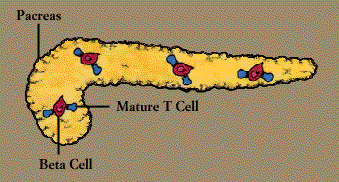
Autoimmune reactions contribute to many enigmatic diseases. For instance, autoantibodies to red blood cells can cause anemia, autoantibodies to pancreas cells contribute to juvenile diabetes, and autoantibodies to nerve and muscle cells are found in patients with the chronic muscle weakness known as myasthenia gravis. Autoantibody known as rheumatoid factor is common in persons with rheumatoid arthritis.
Persons with systemic lupus erythematosus (SLE), whose symptoms encompass many systems, have antibodies to many types of cells and cellular components. These include antibodies directed against substances found in the cell's nucleus-DNA, RNA, or proteins-which are known as antinuclear antibodies, or ANAs. These antibodies can cause serious damage when they link up with self antigens to form circulating immune complexes, which become lodged in body tissue and set off inflammatory reactions (Immune Complex Diseases).
Autoimmune diseases affect the immune system at several levels. In patients with SLE, for instance, B cells are hyperactive while suppressor cells are underactive; it is not clear which defect comes first. Moreover, production of IL-2 is low, while levels of gamma interferon are high. Patients with rheumatoid arthritis, who have a defective suppressor T cell system, continue to make antibodies to a common virus, whereas the response normally shuts down after about a dozen days.
No one knows just what causes an autoimmune disease, but several factors are likely to be involved. These may include viruses and environmental factors such as exposure to sunlight, certain chemicals, and some drugs, all of which may damage or alter body cells so that they are no longer recognizable as self. Sex hormones may be important, too, since most autoimmune diseases are far more common in women than in men.
Heredity also appears to play a role. Autoimmune reactions, like many other immune responses, are influenced by the genes of the MHC. A high proportion of human patients with autoimmune disease have particular histocompatibility types. For example, many persons with rheumatoid arthritis display the self marker known as HLA-DR4.
Many types of therapies are being used to combat autoimmune diseases. These include corticosteroids, immunosuppressive drugs developed as anticancer agents, radiation of the lymph nodes, and plasmapheresis, a sort of "blood washing" that removes diseased cells and harmful molecules from the circulation.